Light is a fantastic part of our world. It helps us see everything around us and makes life possible on Earth.
Light comes from many sources like the Sun, light bulbs, and even some animals like fireflies through chemical reactions inside their bodies.
Light is a form of energy that travels in waves and can move through the vacuum of space.
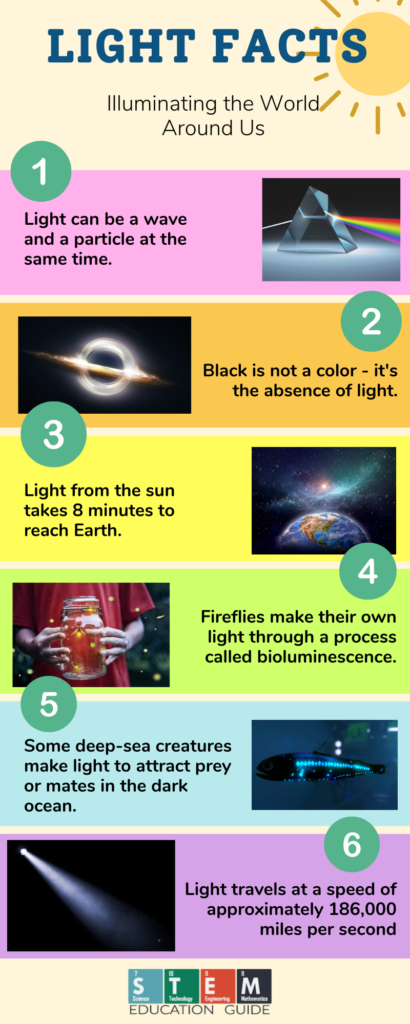
First fact: It zooms from the Sun to Earth in just over 8 minutes!
Light can go through some things, like clear glass, but not others, which is why we see shadows.
Light is made up of different colors that mix together to make white light.
When light hits objects, some colors bounce off while others are soaked up. This is why we see different colors all around us.
Learning about light can be fun for kids, I know my kids have gotten a kick out of light experiments. There are lots of cool facts and experiments to try. Let’s get into it!
Table of Contents
Key Takeaways:
- Light is energy that travels in waves and allows us to see the world
- Light can pass through some materials but not others, creating shadows
- Light is made up of different colors that combine to form white light
What Is Light?
Light is energy that travels through space. It’s how we see the world around us. Light comes from many places and has some cool features we’ll talk about!
Nature of Light
Light is a type of electromagnetic radiation. It moves in waves, and tiny particles called photons at the same time.
Light zips through space at super high speeds. It takes about 8 minutes for sunlight to reach Earth from the Sun.
A red apple looks red because it reflects red light and absorbs other colors. We see it as red from the light bouncing off the surface of the apple, to our eyes.
Light Sources
Light comes from natural and artificial sources. The biggest natural light source is our Sun. Other stars also make light.
People make artificial light sources. Light bulbs are the most common or the screen you’re using to read this right now.
Candles, flashlights, and glow sticks also create light. Some animals, like fireflies, can make their own light through a process called bioluminescence.
Visible Light and the Human Eye
The light we can see is called visible light. It’s just a small part of the electromagnetic spectrum. Visible light includes all the colors of the rainbow.
Our eyes are designed to detect visible light. Ultraviolet light is also around us but we can’t pick it up with our eyes. When light enters our eyes, special cells turn it into signals. Our brain then turns these signals into the images we see.
Different animals can see different types of light. Some can see ultraviolet light that humans can’t detect. Others, like snakes, can sense infrared light to find warm-blooded prey.
| Color | Wavelength (nm) | Example in Nature |
|---|---|---|
| Red | 620–750 | Sunsets |
| Orange | 590–620 | Autumn leaves |
| Yellow | 570–590 | Sunflowers |
| Green | 495–570 | Grass |
| Blue | 450–495 | Sky |
| Violet | 380–450 | Lavender flowers |
The Science of Light
Optics
Optics is the study of light. It looks at how light moves and how it interacts with objects.
Lenses are important in optics. They bend light to make things look bigger or smaller.
Telescopes use lenses to see far-away objects like stars. Microscopes use lenses to see tiny things like germs.
Cameras also use lenses to take pictures. When you snap a photo, light goes through the lens and makes an image.
Have you ever been to the eye doctor? Eye doctors use optics to help people see better with glasses.
Light Behavior
This is one of the most interesting things about light as it moves around. It can bounce off things, which is called reflection.
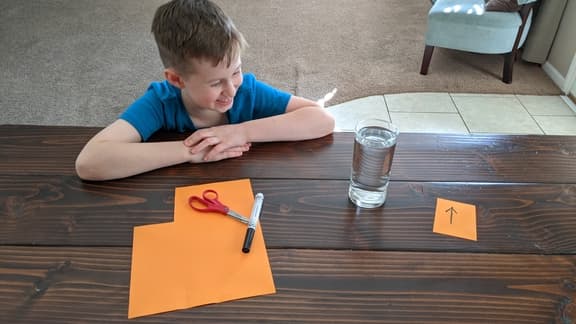
Mirrors use reflection to show your image. Light can also bend when it goes from air into water or glass. This bending is called refraction.
Refraction makes a straw in a glass of water look bent. It’s also why things underwater seem closer than they really are.
Light can spread out too, which is called diffraction. This happens when light goes through a small opening.
Properties and Measurements
Light has special features scientists can measure. Its speed is super fast – about 186,000 miles per second! That’s fast!
Light also has different colors. Each color has its own wavelength and frequency.
Red light has a long wavelength, while blue light has a short one.
Scientists use the refractive index to show how much light slows down in different materials. Water has a higher index than air, so light moves slower in water.
Light can be bright or dim. This is called intensity.
Lasers make very intense light that all moves in the same direction.
Light in Nature
Light creates amazing sights in the natural world.
Colorful Displays
The sky often lights up in beautiful colors. Rainbows appear when sunlight hits raindrops just right. I’ve seen a thousand rainbows, but I still stop and look when I see one.
The light splits into different colors as it bends through the water.
At sunset, the sky can turn shades of pink, orange, and purple. This happens as sunlight travels through more of Earth’s atmosphere.
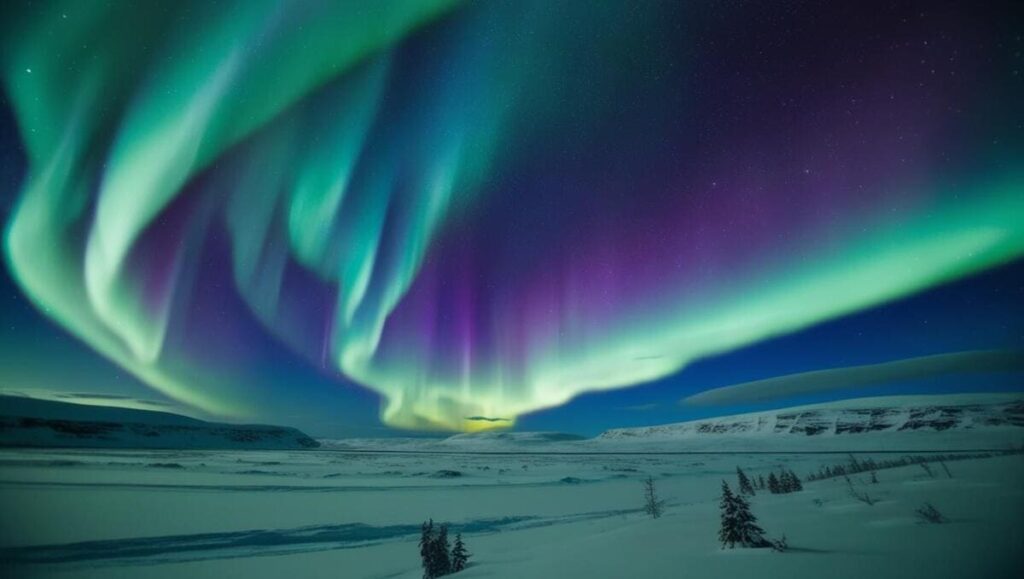
As you can see from the pic above, The northern lights, or aurora borealis, paint the night sky in greens, pinks, and blues.
These lights dance across the sky near the North Pole. They form when particles from the sun hit Earth’s magnetic field.
Natural Phenomena
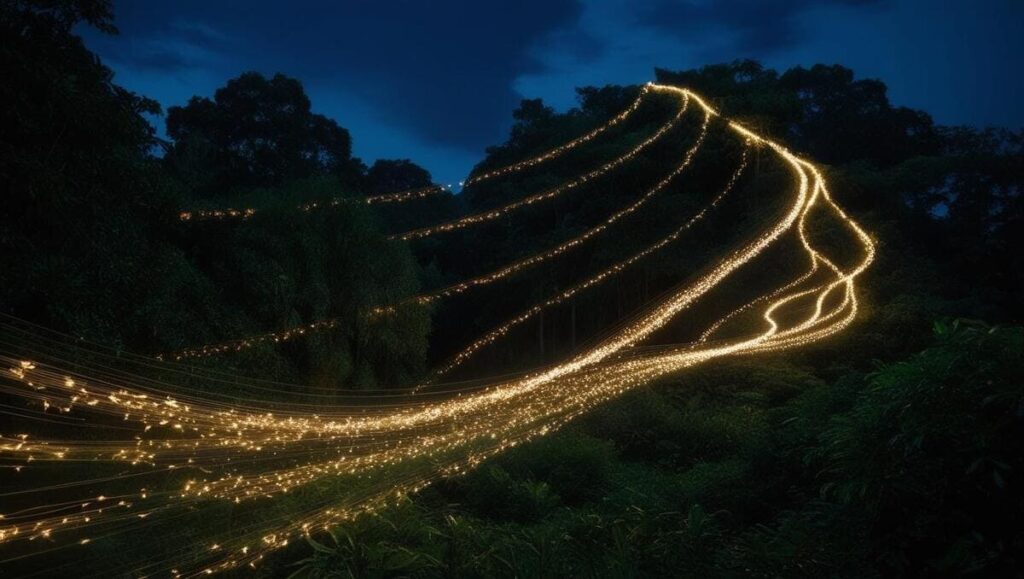
Fireflies flash to attract mates.
Deep in the ocean, fish and jellyfish glow in the dark. This is called bioluminescence.
Lightning creates bright flashes during storms. It heats the air so much that it glows.
Moonlight is actually sunlight bouncing off the moon’s surface. This gentle glow lights up the night sky.
Some materials absorb light and then slowly release it. This is called phosphorescence.
Glow-in-the-dark stickers work this way. In nature, some sea creatures use this trick to light up the ocean.
Interactions with Light
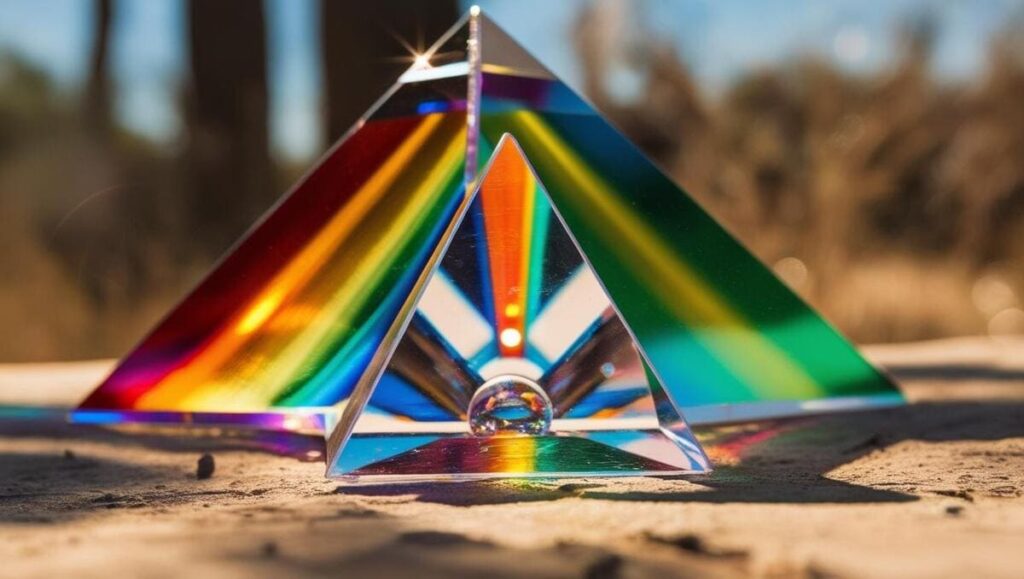
Light interacts with objects in different ways. This affects how we see colors and how light behaves when it hits various materials.
Color Perception
The sun is not actually yellow; it’s white.
The white light from the sun is a mix of all colors. When white light hits a prism, it splits into a rainbow. This shows all the colors that make up white light.
Some animals see colors differently than humans. Bees can see ultraviolet light, which helps them find flowers. Dogs can’t see as many colors as humans can; they see gray tones.
Materials and Light
Objects interact with light in three main ways:
- Transparent materials let light pass through easily. You can see clearly through glass or clean water.
- Translucent materials let some light through, but scatter it. Frosted glass is translucent – light passes through, but you can’t see clear shapes.
- Opaque materials block light. You can’t see through a wooden door or a brick wall.
Mirrors reflect light, bouncing it back in a clear image. Shiny metal surfaces like polished steel also reflect light well. Dark surfaces absorb more light than they reflect.
Advanced Light Concepts
Light has many interesting properties beyond what we can see with our eyes.
Beyond Visible Light
I already mentioned that white light is made up of all the colors we can see. But there’s more to light than meets the eye.
Electromagnetic radiation includes invisible types of light. Ultraviolet light causes sunburns. Infrared light feels warm on our skin (like the old incandescent light bulbs that are hot). X-rays help doctors see inside our bodies. Gamma rays come from space.
Innovative Uses of Light
Laser beams are very focused light. They can cut metal or carry information.
Fiber optics use light to send internet data around the world. The wires are not made of copper but thin, flexible glass or plastic fiber.
Light helps us understand the universe. It lets us see faraway galaxies and tiny atoms. As we learn more about light, we keep finding new ways to use it.
Historical Figures in Light Science
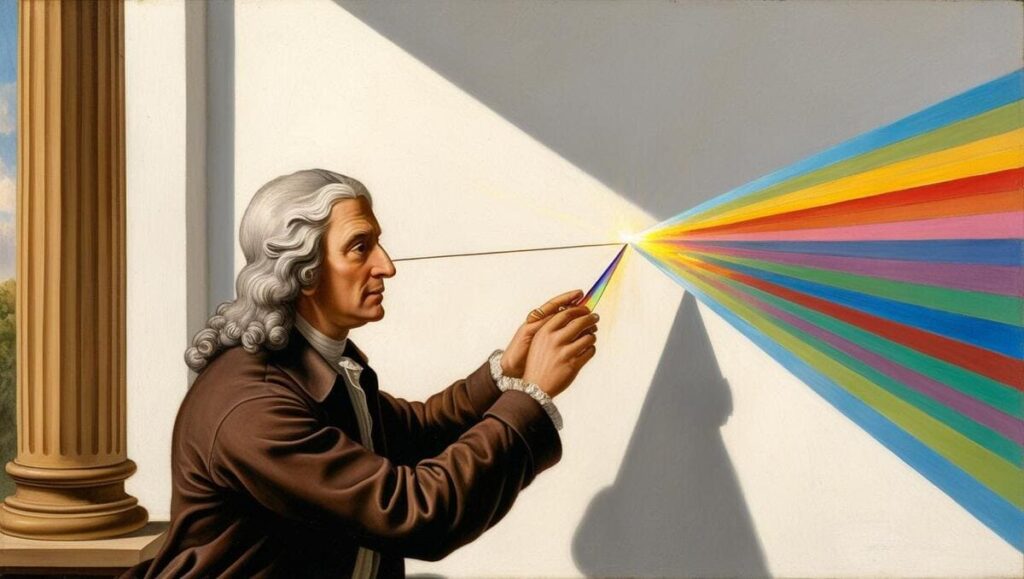
Many smart people helped shed light on, well, light. (corny joke, I know, lol!).
They made cool tools and figured out how light works.
Pioneers of Light
Isaac Newton was a big name in light science. He used a prism to split white light into different colors.
Christiaan Huygens came up with the idea that light moves in waves. James Clerk Maxwell later proved this with math. He showed that light is a type of electromagnetic wave.
Galileo didn’t study light directly, but he made better telescopes. These helped people see farther into space.
These scientists paved the way for new tools like spectroscopy. By looking at their light, this lets us study what stars are made of.
Fun Light Experiments
Here are some fun experiments to try at home or school.
Exploring Refraction
Refraction happens when light bends as it moves from one material to another.
To see this, put a pencil in a clear glass of water. The pencil will look bent where it enters the water. This is because light moves differently through air and water.
Another neat trick is the disappearing coin.
Put a coin in an empty cup. Step back until you can’t see the coin over the rim. Ask someone to slowly pour water into the cup. The coin will seem to rise and become visible again!
These experiments show how light changes direction when it moves between materials. This is why things can look different underwater or through glass.
Creating a Rainbow
Rainbows are beautiful displays of the visible light spectrum. You can make your own rainbow at home with simple items.
On a sunny day, fill a glass with water and place it on a white surface near a window. The sunlight will pass through the water and split into different colors.
For a bigger rainbow, use a garden hose on a fine mist setting.
Stand with your back to the sun and spray water into the air. You should see a rainbow form in the mist.
The Future of Light Technology
Innovations
Scientists are working on cool new ways to use light.
Some are making tiny lights called quantum dots. These can change colors and might be used in super clear TV screens.
Others are trying to make light move information faster than ever before. This could lead to faster internet.
There’s also work on lights that can bend around objects. If you think about it, this might help make things invisible one day!
Frequently Asked Questions
How do light-emitting diodes (LEDs) work for kids?
LEDs are special lights that use less energy than incandescent bulbs we all grew up with. They work by moving tiny particles called electrons through a material.
What is a light year, and how is it explained for kids?
A light year is how far light travels in one year. It’s about 6 trillion miles! We use light-years to measure really big distances in space.
The closest star to Earth is about 4 light-years away, and it’s called Proxima Centauri.